Parker Foster · 3 September 2026
Rare Historical Chest Enters Museum Collection While Apprentices Learn from Veterans Using Tested Ergonomic Tools
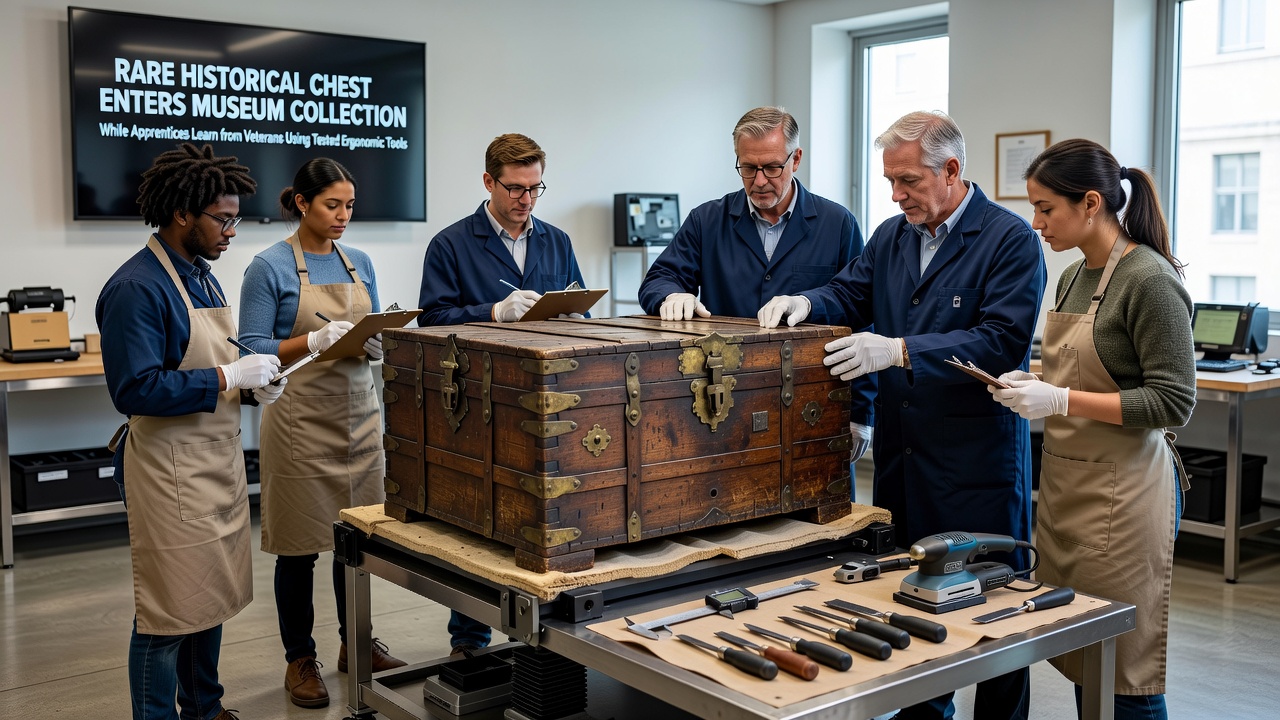
September 2026 marks a notable moment for wood carving preservation as a rare 17th-century oak chest joins a public collection at the same time training programs pair experienced carvers with newcomers who rely on established ergonomic equipment. The chest features intricate relief panels depicting maritime scenes and measures 48 inches wide by 24 inches deep and stands 30 inches tall, and museum records indicate it originated from a coastal workshop in New England where similar pieces served storage and decorative purposes in merchant households.
Historical Context of the Chest Acquisition
Curators at the institution acquired the piece through a private donation after authentication confirmed its age through dendrochronology testing and stylistic analysis that matched known examples from the period. Documentation shows the chest passed through several family estates before entering the market, and conservation teams have since stabilized the wood surfaces while preserving original tool marks that reveal hand-carved details. Those who've examined comparable artifacts note that the joinery techniques include dovetails reinforced with wooden pegs, a method that provided durability without metal fasteners common in later production.
Concurrent Apprenticeship Developments
While the museum processes the chest, several workshops have launched sessions where veterans demonstrate carving methods to apprentices who use tools designed with ergonomic handles and balanced weight distribution. These sessions occur in dedicated spaces equipped with adjustable benches and lighting systems that reduce strain during extended work periods, and participants practice on practice blocks before advancing to detailed relief work similar to patterns found on the historical chest. Data from craft education programs indicates that such structured pairings have supported skill retention across multiple regions, including training initiatives documented by organizations like the Canadian Woodworking Federation.
Apprentices begin with basic cuts using chisels fitted with contoured grips that align with natural hand positions, and they progress to compound curves under direct supervision. Veterans share observations about material behavior under different humidity levels, since oak responds differently depending on moisture content, and this knowledge transfer occurs alongside instruction on tool maintenance routines that extend equipment lifespan. Research from the Australian Centre for Wood Science and Technology shows that consistent use of tested ergonomic designs correlates with fewer reported hand fatigue incidents among practitioners who log more than four hours daily at the bench.
Integration of Preservation and Training Practices
The timing of the chest's arrival creates opportunities for apprentices to study authentic examples up close during guided visits, and instructors incorporate these observations into lessons that emphasize historical accuracy alongside modern safety standards. One workshop documented how participants replicated a section of the chest's border motif using the same sequence of cuts recorded in period accounts, while they tracked their posture and grip adjustments with guidance from mentors. Such activities connect past techniques with present methods without altering the core focus on functional carving skills.
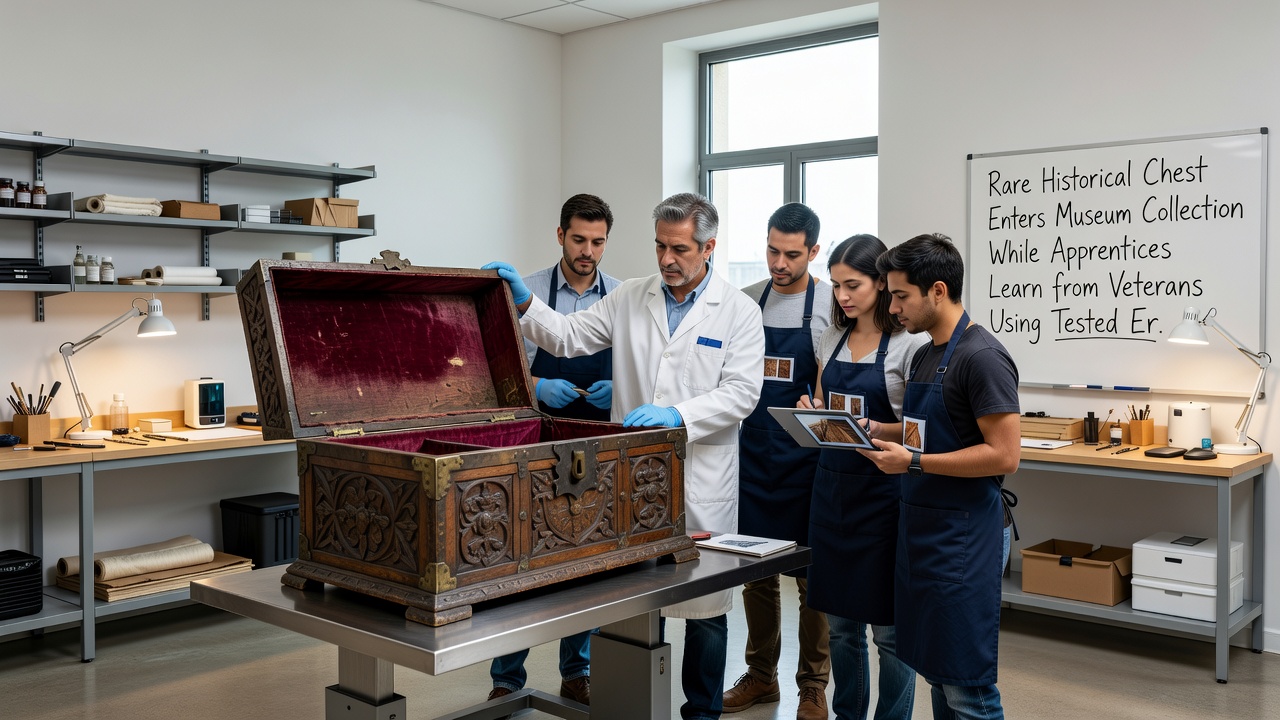
Equipment suppliers have supplied sets of tools tested for repetitive motion patterns, and these include mallets with vibration-dampening heads alongside gouges available in graduated sweep profiles. Training logs from participating sites record that apprentices complete initial modules within six weeks before they attempt independent projects, and feedback sessions allow veterans to adjust instruction based on observed progress. Institutions such as the European Woodcraft Research Network have published summaries of similar programs that highlight measurable improvements in precision when ergonomic considerations receive equal attention with technique.
Broader Implications for Craft Continuity
Museum staff plan to display the chest alongside interpretive panels that describe both its construction and the contemporary training approaches that draw from its details. Visitors can view the artifact while nearby demonstrations show apprentices applying comparable relief methods with updated tools, and this arrangement allows direct comparison of outcomes across centuries. Records from the acquisition process list the chest's condition as stable after minor surface cleaning, and future conservation cycles will monitor any changes in the wood grain that might affect long-term stability.
Workshops continue to refine their curricula by incorporating feedback from both mentors and participants, and they track metrics such as completion rates and skill assessments that align with industry benchmarks. The combination of artifact preservation and hands-on instruction creates pathways for knowledge to move forward, and regional craft groups maintain directories of available sessions that interested individuals can access through established networks. Observers note that the overlap between these activities in September 2026 illustrates how collections and training environments operate in tandem within the field.
Conclusion
The entry of the historical chest into the museum collection alongside active apprenticeship programs demonstrates parallel efforts in documentation and skill development. Veterans guide newcomers through established methods supported by ergonomic tools, while the artifact provides tangible reference material for study. These elements together sustain the practice of wood carving across generations without introducing new variables beyond those already verified through ongoing program evaluations.